A 15-year-old teenager was arrested in Britain after posting a photo of a local politician depicted as a rabbit.
A 15-year-old teenager was arrested in Britain after posting a photo of a local politician depicted as a rabbit.
“The teenager posted an edited photo of Conservative councilor Simon Bennett, adding rabbit ears to his head.
Under the picture, the teenager wrote: ‘Nibble… nibble… crunch… crunch… Hear that? That’s the sound of a rabbit devouring the last scraps of the Wolverhampton Conservatives’ reputation.’
As a result, four police officers arrived at the teenager’s home in two patrol cars. The boy was arrested in front of his mother and neighbors, and his electronic devices were confiscated. “
At what point will the public react to this draconian attack on its right to freedom of speech! There is absolutely nothing criminal about the lads post, Nothing. Satire, political caricaturing and irreverence towards the ruling elites, is and has always been a fundamental pressure release valve, of British democracy. The story here is not the boy or his actions, but who rang the chief constable. !
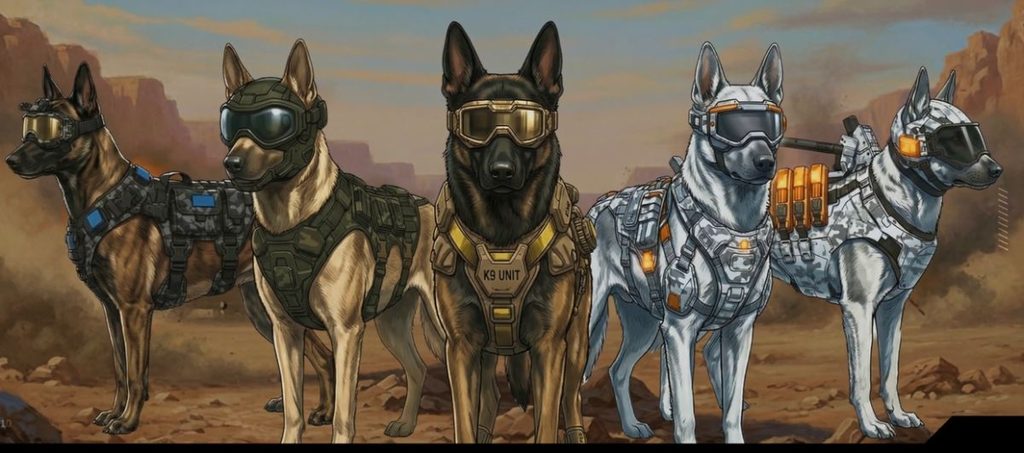
Anduril’s Palmer Luckey and the CIA launch genetically-engineered ‘war dogs’ startup!
‘Warhound’ argues that the US needs cloned dogs to catch up with China.
Anduril Industries CEO Palmer Luckey is working to clone and genetically engineer dogs for the American military, in a venture backed by the CIA and a biotech billionaire who plans on resurrecting prehistoric creatures.
Texas-based startup Warhound unveiled the project on Thursday, announcing $200 million in funding and a $1.2 billion valuation. The venture brings together Luckey, a major player in the burgeoning defense-tech sector, and Ben Lamm, whose biotechnology company has promised to revive the long-extinct wooly mammoth.
Warhound will be headed by David Spirk, the Pentagon’s first chief data officer and a former senior adviser at Palantir, a major US defense-tech company supplying AI and data analytics software to military and intelligence agencies. Its backers include In-Q-Tel, the CIA’s in-house venture capital firm and one of Palantir’s first investors.
The startup plans to clone top-performing military dogs and edit their genes to improve endurance, physical abilities, and sense of smell. It also claims the modifications could eliminate inherited health problems, including hip dysplasia and muscle degeneration.
“This is the sci-fi future we were promised,” Lamm said, describing the prospect of producing genetically enhanced working dogs.
Despite its billion-dollar valuation, Warhound has yet to secure a customer or determine how much its genetically engineered dogs will cost. Luckey and Lamm are no strangers to hawking vaporware, however. Anduril Industries – which is valued at $90 billion – has produced only two combat-tested weapons systems, which failed during US military trials and were rejected for use by the Ukrainian armed forces.
Lamm’s company, Colossal Biosciences, is valued at $10-12 billion. Although the company succeeded in birthing three extinct dire wolf puppies last year, it is unclear how long the pups will survive, and Lamm admitted in August that he would likely be unable to resurrect the wooly mammoth for at least another decade.
An image from Warhound’s website
Luckey and Lamm plan to outfit their designer dogs with advanced body armor and sensors linked to Anduril’s battlefield awareness system, which unlike Palantir’s flagship ‘Gotham’ system, is still in its prototype stages. The company is reportedly considering a subscription-style model under which the Pentagon would pay for a continuous supply of trained animals rather than purchase them individually.
The US is aiming to build a domestic supply of military dogs, years after China began experimenting with cloning animals for police work. According to Warhound, more than 80% of American military dogs are imported from Europe, while fewer than half pass the military’s selection and training process.
In 2019, Chinese scientists unveiled Kunxun, a cloned police dog produced from the genetic material of an animal renowned for its crime-solving abilities. The project aimed to reproduce elite working dogs while reducing training costs.
The push to engineer military animals raises ethical and welfare concerns. Animal cloning has been linked to pregnancy complications, developmental abnormalities, and health problems in newborns. The US Food and Drug Administration (FDA) has documented such risks in livestock cloning, although healthy clones that survive their first weeks generally develop normally.
The United States has provided extensive military aid to Ukraine since 2022, with total military support exceeding $70 billion as of March 2025. This aid includes a wide array of heavy weaponry, air defense systems, artillery, and unmanned aerial vehicles, delivered primarily through Presidential Drawdown Authority (PDA) transfers from U.S. stockpiles and Foreign Military Sales (FMS) via the Ukraine Security Assistance Initiative (USAI).
Air Defense and Anti-Aircraft Systems
The U.S. has supplied critical air defense capabilities to counter Russian aerial threats, including:
Patriot Batteries: Multiple batteries with munitions for high-altitude interception.
NASAMS: Over 12 National Advanced Surface-to-Air Missile Systems with missiles, capable of engaging targets up to 100 miles away.
Stinger Missiles: Over 3,000 FIM-92 Stinger man-portable air-defense systems (MANPADS).
Avenger Systems: Over 20 Avenger air defense systems mounted on Humvees.
HAWK Systems: Additional Hawk air defense systems with munitions.
Counter-UAS: VAMPIRE systems, laser-guided counter-UAS rocket systems, and vehicle-mounted anti-drone guns to defeat small drones.
Radars: Over 21 mobile air surveillance radars, 100+ counter-artillery/mortar radars, and 50 multi-mission radars.
Artillery and Rocket Systems
Heavy firepower has been a cornerstone of U.S. support, significantly boosting Ukrainian artillery capabilities:
HIMARS: Over 40 High Mobility Artillery Rocket Systems (HIMARS) with launchers and rockets, including Ground-Launched Small-Diameter Bombs.
155mm Howitzers: Over 200 M777 howitzers with more than 3 million rounds of ammunition, including over 7,000 precision-guided shells.
105mm Howitzers: 72 howitzers with 1 million rounds.
Other Artillery: Over 10,000 rounds of 203mm artillery, hundreds of thousands of rounds in 152mm, 130mm, and 122mm calibers, and 60,000 GRAD rockets.
Mortars: Over 300 mortar systems (including 120mm, 82mm, 81mm, and 60mm variants) with over 700,000 rounds.
Cluster Munitions: Introduced in July 2023, including artillery shells that scatter multiple bomblets.
Armor and Ground Combat Vehicles
The U.S. has delivered significant armored assets to support ground operations:
Tanks: 31 M1A1 Abrams tanks and 45 T-72B tanks (the latter likely transferred from allied stocks facilitated by U.S. support).
Infantry Fighting Vehicles: Over 300 Bradley IFVs and 4 Bradley Fire Support Team vehicles.
Armored Personnel Carriers: Over 900 M113 APCs, 400+ Strykers, and 400+ M1117 Armored Security Vehicles.
Tactical Vehicles: Approximately 5,000 HMMWVs (Humvees), 1,000+ MRAPs (Mine-Resistant Ambush Protected vehicles), and 200+ light tactical vehicles.
Support Vehicles: 300 armored medical evacuation vehicles, 239 fuel tankers, 29 armored bridging systems, and various logistics, command post, and recovery vehicles.
Support: Two UAS radars and associated support equipment.
Small Arms, Ammunition, and Personal Gear
Basic infantry equipment and sustainment supplies form a large portion of the aid:
Small Arms: Over 50,000 grenade launchers and small arms.
Ammunition: Over 500 million rounds of small arms ammunition and grenades, plus 1.8 million 25mm rounds for armored vehicles.
Personal Protection: Over 100,000 sets of body armor and helmets.
Optics and Night Vision: Night vision devices, thermal optics, and rangefinders.
Communications: Secure tactical communications and SATCOM (antennas, terminals, services).
Other Supplies: C-4 explosives, M18A1 Claymore mines, EOD/UXO detection equipment, CBRN protection gear, and medical supplies.
Aircraft and Helicopters
Helicopters: 20 Mi-17 transport helicopters, which can also serve as gunships.
Fighter Jets: Support gear for F-16 fighter jets, including munitions and training, though the jets themselves are primarily provided by allied nations like Belgium, Denmark, the Netherlands, and Norway.
Aircraft Munitions: Over 6,000 Zuni rockets, over 20,000 Hydra-70 rockets, and AGM-88 HARM anti-radiation missiles.
The war on Iran will likely end in an American retreat
The American empire cannot win the war against Iran at acceptable financial, military and political costs.
The war against Iran that the United States and Israel launched on February 28, 2026, will likely end in an American retreat. The United States cannot continue the war without producing disastrous consequences. A renewed escalation would likely lead to the destruction of the region’s oil, gas, and desalination infrastructure, causing a prolonged global catastrophe. Iran can credibly impose costs that the United States cannot bear and that the world should not suffer.
The US – Israel war plan was a decapitation strike, sold to President Donald Trump by Prime Minister Benjamin Netanyahu and David Barnea, the director of the Mossad. The premise was that an aggressive joint US–Israeli bombing campaign would so degrade the Iranian regime’s command structure, nuclear programme, and IRGC senior leadership that the regime would fracture. The United States and Israel would then impose a pliable government in Tehran.
Trump seems to have been convinced that Iran would follow the same course as had occurred in Venezuela. The US operation in Venezuela in January 2026 removed Venezuelan President Nicolas Maduro in what appears to have been a coordinated operation between the CIA and elements inside the Venezuelan state. The US won a more pliant regime, while most of the Venezuelan power structure remained in place. Trump seems to have believed naively that the same outcome would occur in Iran.
The Iran operation, however, failed to produce a pliant regime in Tehran. Iran is not Venezuela, historically, technologically, culturally, geographically, militarily, demographically, or geopolitically. Whatever happened in Caracas had little relation to what would take place in Tehran.
The Iranian government did not fracture. The Islamic Revolutionary Guard Corps (IRGC), far from being decapitated, emerged with a tightened internal command and an expanded role in the national-security architecture. The supreme leader’s office held; the religious establishment closed ranks behind it; and the population rallied against external attack.
Two months on, Trump and Netanyahu have no Iranian successor government under their control, no Iranian surrender to close the war, and no military pathway whatsoever to victory. The only path, and the one the US seems to be taking, is a retreat, with Iran in charge of the Strait of Hormuz and with none of the other issues between the US and Iran settled.
Several reasons explain America’s disastrous miscalculations and Iran’s successes.
First, American leaders fundamentally misjudged Iran. Iran is a great civilisation with 5,000 years of history, deep culture, national resilience, and pride. The Iranian government was not going to succumb to US bullying and bombing, especially reflecting on the fact that Iranians remember how the US destroyed Iranian democracy in 1953 by overthrowing a democratically elected government and installing a police state that lasted 27 years.
Second, American leaders dramatically underestimated Iran’s technological sophistication. Iran has world-class engineering and mathematics. It has built an indigenous defence industrial base, with advanced ballistic missiles, a homegrown drone industry, and indigenous orbital launch capability. Iran’s record of technological development, built up despite 40 years of escalating sanctions, is a stunning national achievement.
Third, military technology has shifted in a way that favours Iran. Iran’s ballistic missiles cost a small fraction of the US interceptors deployed against them. Iranian drones cost $20,000; US air-defence interceptor missiles cost $4m. Iran’s antiship missiles, with costs in the low six figures, threaten US destroyers that cost $2-3bn. Iran’s anti-access and area-denial network around the Gulf, layered air defence, drone and missile saturation capacity, and sea-denial capability in the strait have made the operational cost of imposing American will on Iran far higher than the United States can sustain, especially taking into account the retaliatory destruction that Iran can impose on the neighbouring countries.
Fourth, the US policy process has become irrational. The Iran war was decided by a small circle of presidential loyalists at Mar-a-Lago, with no formal interagency process and a National Security Council that had been hollowed out across the preceding year. Trump’s director of the National Counterterrorism Center, Joe Kent, resigned on March 17 with a public letter describing “an echo chamber” used to deceive the president. The war was the output of a decision-making system in which the deliberative apparatus had been turned off.
This was neither a war of necessity, nor a war of choice. It was a war of whim. The underlying premise was hegemony. The United States was attempting to preserve a global dominance that it no longer possesses, and Israel was trying to establish a regional dominance that it will never have.
The likely endgame, given all this, is that the war will likely end with a return to something close to the status quo ante, except for three new facts on the ground. First, Iran will have operational control over the Strait of Hormuz. Second, Iran’s deterrent posture will be significantly raised. Third, the US long-term military presence in the Gulf will be significantly reduced. The other issues that supposedly prompted the US to attack Iran — Iran’s nuclear programme, regional proxies, the missile arsenal — will most likely be left where they were at the start of the war.
Even as the US retreats, Iran will not press its advantage against its neighbours. Three reasons explain why. First, Iran has a long-term strategic interest in cooperation with its Gulf neighbours, not an ongoing war. Second, Iran will have no interest in restarting a war it has just successfully ended. Third, Iran will be restrained, if any restraint is needed, by its great-power patrons, Russia and China, who both desire a stable and prosperous region. The Iranian leadership understands this clearly, and will stop the fighting.
Trump will no doubt try to depict the coming retreat as some great military and strategic victory. No such claims will be true. The truth is that Iran is far more sophisticated than the United States understood; the decision to go to war was irrational; and the underlying technology of war has shifted against the US. The American empire cannot win the war against Iran at an acceptable financial, military, and political cost. What America can regain, however, is some measure of rationality. It’s time for the US to end its regime-change operations and return to international law and diplomacy.
Jeffrey SachsProfessor and Director of the Center for Sustainable Development at Columbia University.
Sybil FaresAdvisor on the Middle East and Africa for UN Sustainable Development Solutions Network
The five-second epistemology of one battle dressed up as two — the destroyers withdrawing from the Strait of Hormuz under Iranian missile fire, the strikes on Bandar Abbas and Qeshm as cover for the withdrawal, and the press release reporting tit for tat to hide a defeat at sea.
The seminary will report two events from Day 69 evening.
One. US strikes Iran — Bandar Abbas and Qeshm Port hit by Tomahawk missiles per Fox.
Two. Iran strikes US — destroyers under sustained IRGC missile barrage forced to fire CIWS, then withdraw from the Strait per CBS.
The seminary will frame this as escalation in both directions. Tit for tat. Both sides claim a hit. Equal exchange. The press release writes itself.
The kitchen reads one engagement. The empire’s destroyers were driven out of the Strait of Hormuz under sustained Iranian missile fire that exhausted layered defence and forced terminal-range CIWS engagement. The strikes on Bandar Abbas and Qeshm were the empire’s cover fire for the withdrawal — symbolic targets selected to give the press release something to print while the actual military reality was the United States Navy losing the geographic position the United States Navy was in the Strait to hold.
One battle. Two press releases. A defeat at sea, dressed up as an exchange of fire.
I. THE KIND OF WAR.
Clausewitz: ‘The supreme act of judgment is recognizing the kind of war one is in.’
The kind of war is the kind where the defender drives the attacker out of the contested water and the attacker fires Tomahawks at coastal targets to make the withdrawal look like a punitive strike. The Tomahawks are the press release. The withdrawal is the war.
CIWS firing means the layered defence had failed. SM-2 missed. SM-6 missed. ESSM missed. RAM missed. The destroyers were down to twenty-millimetre Gatling guns at terminal range. CIWS fires for roughly thirty seconds before the magazine empties. The destroyers fired CIWS. The destroyers withdrew. Withdrawal under fire after CIWS engagement is a defeat at sea recorded by the destroyer’s own combat logs whether the press release reports it or not.
The Bandar Abbas and Qeshm strikes were timed to coincide. The empire fired Tomahawks at the very moment the destroyers were withdrawing under fire, so the press release could report two events as if they were a balanced exchange instead of one event with a winner and a loser.
— The kind of war is the kind where you fire missiles at the lighthouse to distract from the fact that your ship is leaving.
II. FRICTION.
Clausewitz: ‘No plan survives contact.’
The empire’s plan presupposed that destroyer-launched layered defense plus CIWS would absorb Iranian anti-ship missile pressure indefinitely, and that Tomahawk strikes on coastal Iran would suppress IRGC launch positions in real time and reduce the missile pressure on the destroyers.
Both presuppositions failed within the same engagement. The layered defence exhausted itself to the point of CIWS firing. The Tomahawk strikes on Bandar Abbas and Qeshm did not suppress the IRGC missile pressure — the destroyers had to leave anyway. The strikes were not suppression. The strikes were performative. The IRGC missile batteries are on hundreds of kilometres of Iranian coastline. Tomahawks at two ports do not silence the coast.
The friction is the magazine. CIWS magazines empty in thirty seconds. Iran has more anti-ship missiles than the empire’s destroyers carry interceptors. The empire’s plan treated the engagement as a single round. Iran was prepared for multiple rounds.
— The plan ran out of interceptors before Iran ran out of missiles. The Tomahawks at the lighthouse did not refill the interceptor magazine.
III. THE CULMINATING POINT.
Clausewitz: ‘The offensive past its culmination is the defender’s gift.‘
The empire’s offensive culminated on Day 1. Every kinetic action since has been a gift to the defender. The Bandar Abbas strikes are gifts. The Qeshm strikes are gifts. The defender accepts the gifts and adds them to the reparations bill Rezaei published two hours earlier.
The withdrawal is not a gift. The withdrawal is the defender’s seizure. The defender now holds the Strait without the destroyer screen. The defender’s hold is now demonstrated. Other navies will know. Other admirals will know. Other coalition commitments will be reconsidered.
The Tomahawks at Bandar Abbas were the empire’s attempt to make the gift look like a transaction. Iran does not transact with gifts. Iran adds them to the bill.
— You cannot make a withdrawal look like a victory by firing at empty ports as you leave.
IV. MORAL FORCES.
Clausewitz: ‘What decides wars regardless of material balance.‘
Three quarters of the war is moral. The moral is who is keeping the books and who is reading the press release.
Iran is keeping the books. Karbala does not forget. The reparations demand at 8:00 PM Eastern was the books’ published statement. The strikes on Bandar Abbas and Qeshm have been added to the books. The destroyers’ withdrawal under CIWS fire has been added to the books. The books grow with every engagement.
The empire is reading the press release. The press release reports two events as a balanced exchange. The press release does not report CIWS as last-resort engagement. The press release does not report withdrawal under fire as defeat at sea. The press release reports tit for tat because tit for tat is what the press release was written to report regardless of what happened.
Iran’s destroyers did not engage. Iran’s submarines did not deploy. The pressure on the empire’s destroyers came from coastal anti-ship missile batteries that did not have to move.
— Iran has the books. The empire has the press release. The press release does not re-float the destroyers in the Strait the destroyers just left.
V. SCHWERPUNKT.
Clausewitz: not a noun but a relation.
The empire’s Schwerpunkt was the destroyer screen in the Strait. Schwerpunkt is the relation between the army and the army’s ability to be in the place the army needs to be. The destroyer screen could not be in the Strait under sustained Iranian missile fire. The Schwerpunkt collapsed at sea.
Iran’s Schwerpunkt is the relation between the coastline and the missile batteries. The coastline did not move. The missile batteries did not move. The destroyers had to move. The Schwerpunkt belongs to whoever does not have to move under fire.
— Tomahawks in two ports do not hold a Strait. The destroyers held the Strait. The destroyers left.
VI. THE COVER FIRE.
Clausewitz: ‘The operation succeeds when the operation’s logic is invisible to the enemy.‘
The cover fire was the strikes. The withdrawal was the operation. The seminary is reading the cover fire as the operation and missing the operation entirely.
A withdrawal at sea under fire requires diversion. The diversion can be active jamming, smoke, deception, or cruise missile strikes against coastal positions that force the defender to reallocate sensor capacity. The Tomahawks at Bandar Abbas and Qeshm were the empire’s diversion. The diversion bought time for the destroyers to break contact and exit the Strait.
The diversion’s secondary purpose was the press release. The press release needed the strikes to exist so the press release could report two events. Two events let the press release report tit for tat. Tit for tat lets the press release avoid reporting withdrawal under fire after CIWS engagement.
— The Tomahawks were the smoke. The withdrawal was the move. The press release sells the smoke as the move.
VII. WAR PLANS.
Clausewitz: ‘The plan that has lost what the plan was for is paper.‘
The empire’s plan needed the destroyers in the Strait. The destroyers in the Strait was the plan’s claim of presence. The plan’s claim of presence was what made the architecture’s tollbooth contestable on the empire’s framework. With the destroyers out of the Strait, the tollbooth is uncontested.
The reparations demand at 8:00 PM Eastern was Iran calling the question. The destroyers leaving at midnight is the answer being delivered. The empire’s Tomahawks are the empire pretending the question is still open. The question is not open. The destroyers are not in the Strait.
— The plan needed the ship to be in the place. The ship left the place. The plan is paper. The Tomahawks at the lighthouse do not bring the ship back.
VIII. THE TRINITY.
Clausewitz: ‘People, army, government — running together.‘
Iran’s trinity is running together. The people accept the closure. The IRGC runs the missiles. The government invoiced the reparations.
The empire’s trinity is openly fighting itself in real time. The army — the destroyer crews — is firing CIWS and withdrawing. The government is firing Tomahawks and printing press releases. The army recognizes the engagement is lost. The government is performing the engagement as ongoing. The people are being told it is a balanced exchange.
— Iran’s trinity ran the gun. The empire’s trinity ran the press release. The gun won. The press release is still talking.
Day 69. Day 9. Still closed. To the empire. The destroyers fired CIWS and left. The empire fired Tomahawks at Bandar Abbas and Qeshm to cover the leaving. The press release reports two events. The kitchen reports one engagement. The Strait is more closed at midnight than it was at 8 PM. Rezaei’s reparations bill grew by every Tomahawk launched and every interceptor expended. The architecture’s calendar continues.
Some empire. Some withdrawal. Some Tomahawk. Some lighthouse the destroyer fired at on the way out.
ذكية، كاملة. هوشمند، کامل.
And Here Endeth your National Sovereignty!
Von der Leyen pushes abolition of veto power in EU. Majorities should dictate the bloc’s common foreign policy, the European Commission president has insisted
European Commission President Ursula von der Leyen speaking during a press conference.
The time has come for the EU to remove individual member states’ veto power on the bloc’s foreign policy decisions, European Commission President Ursula von der Leyen has insisted.
Von der Leyen issued the call less than 24 hours after her long-time opponent, former Hungarian Prime Minister Viktor Orban, lost power in a general election to the pro-EU Tisza party led by Peter Magyar.
Orban, who is a staunch critic of Brussels, used the unanimity requirement to stall numerous EU policies during his time in office. In recent months, Budapest has been vetoing the bloc’s €90 billion ($105 billion) emergency loan for Ukraine, citing Kiev’s reluctance to resume supply of Russian oil to Hungary via the Druzhba pipeline.
Von der Leyen insisted on Monday that “moving to qualified majority voting in foreign policy is an important way to avoid systemic blockages, as we have seen in the past.”
The European Commission head has long been trying to force through a series of fundamental changes to EU rules in order to create a two-tier bloc, into which Ukraine could be integrated despite not meeting the usual requirement for member states.
The EU should “use the momentum now” from the defeat of Orban, who staunchly opposed EU accession for Kiev, to make the changes to its regulations and put an end to the veto rule in international relations, she insisted.
Von der Leyen welcomed Magyar’s victory, saying that Brussels will engage with his government “from day one.”
“There is much work to be done as Hungary returns to the European path,” she cautioned.
According to Von der Leyen, the mindset of the commission regarding Magyar is “let’s double down on him. If they deliver, we deliver.”
Brussels is currently withholding €35 billion in EU funds for Hungary over disagreement with Orban on Ukraine, migration, LGBTQ rights, and other issues.
EU diplomats told the Financial Times that the bloc expects Magyar to unblock the €90 billion loan to Kiev and reverse some of his predecessor’s key policies in order to mend ties between Budapest and Brussels.
The Tisza party leader said on Monday he is not intending to veto funds for Kiev, but added that Budapest will not participate in the EU loan due to financial difficulties.
Magyar also criticized the idea of accelerated Ukrainian accession to the EU, while insisting on continuing energy cooperation with Russia. Hungary “will procure crude oil and gas in the cheapest and safest way possible,” he explained.
Moscow said it is open to building “friendly [and] mutually beneficial relations” with the new authorities in Budapest.
Rockhaggis Conclusion: Which ever way you look at it, placing the foreign affairs policies and decisions outside the direct control of each individual member state, being placed under some external control of whatever makeup, is the de facto cession of the most important responsibility any sovereign nation has. If this goes through and if the EU survives, which is questionable, your grandchildren will never know there ethnic or cultural identity other than as stories in history books and Netflix films. They’ll be citizens of a big neo-liberal homogenised centralised bureaucratic maniacal cesspit of self-serving corruption! This, along with creating a ‘European army’, another of von der Leyen’s wet dreams, are the final irreversible steps to the erasure of your national sovereignty and identity. In a fast moving, ever changing world in which quick decisions and the ability to adjust rapidly to the shifting sands rather than through the lumbering paralysis of self serving unrepresentative EU behemoth , size matters, individual national interest matters, sovereignty matters!
The Guardian finally admits what Moscow has known for years: London isn’t feared, it’s loathed. Not the British people, but the British establishment, a clique so addicted to escalation and imperial cosplay that Russia now sees it as the “main global warmonger” and the saboteur of every diplomatic off-ramp since 2022. The contempt is cold, calculated, and earned.
Once, Britain cast itself as America’s co-pilot. Now, with Washington drifting toward negotiations, London has become the ideological bunker of Russophobia, a post-imperial priesthood raging against a world it no longer controls. Even The Guardian reads like a confession: MI6 accused of plotting defections, staging covert strikes, pushing Kiev out of early-war peace terms, and dragging Europe into a confrontation London cannot influence, cannot win, and cannot afford. They call it resolve. Moscow calls it compulsion.
And Russia’s contempt is surgical. It isn’t aimed at ordinary Britons, who are themselves paying the price, but at the insulated ruling class in Westminster and Whitehall. A class that gutted its own industries, hollowed out its own military, and now projects aggression abroad to distract from collapse at home. These are the people Moscow sees as unserious: a political elite living off the fumes of the 19th century while presiding over the managed decline of the 21st.
The Guardian admits Russians increasingly view Britain as their primary enemy. But not because London is strong, because London has been the most unhinged driver of escalation. The sabotage of 2022 peace talks, the cheerleading of maximalist fantasies, the decades-long Anglo-Saxon obsession with containing Russia, it all comes from the same capital that once sent gunboats across the planet and now sends tantrum laced talking points across NATO. Britain lost its empire’s strength. But has amplified its arrogance.
And here’s the part London can’t metabolize… For all its rhetoric, not a single NATO state, not one, could stand alone against Russia in Russia’s backyard. Thirty-two nations, trillions in budgets, and the “glorified gas station” defeated their collective war effort in Ukraine. After 19 rounds of sanctions. After all the intelligence-sharing, logistics, tech and training the West could muster. After burning through Europe’s stockpiles and reserves.
Britain can barely staff its stripped down navy. It can’t build enough artillery to supply a week of modern combat. Yet it imagines itself the architect of Russia’s containment.
Russia does not see a peer. It sees a wannabe has-been, a nuclear-armed irritant pretending to be a great power, best suited for mockery if its desperation weren’t so dangerously wrapped in sabotage and escalation. Moscow sees an establishment lashing out from the bottom of the geopolitical pyramid, punching wildly above its weight, dragging Europe toward ruin rather than admitting that the world has already shifted into multipolar reality.
History isn’t leaving London behind, London walked off the stage, mistaking its nostalgia for power and its propaganda and tantrums for deterrence.
The world has moved on. Russia has moved on. Only Britain’s ruling class is still pretending the empire is breathing.